1 in 83 adults worldwide has gambling disorder, according to the WHO
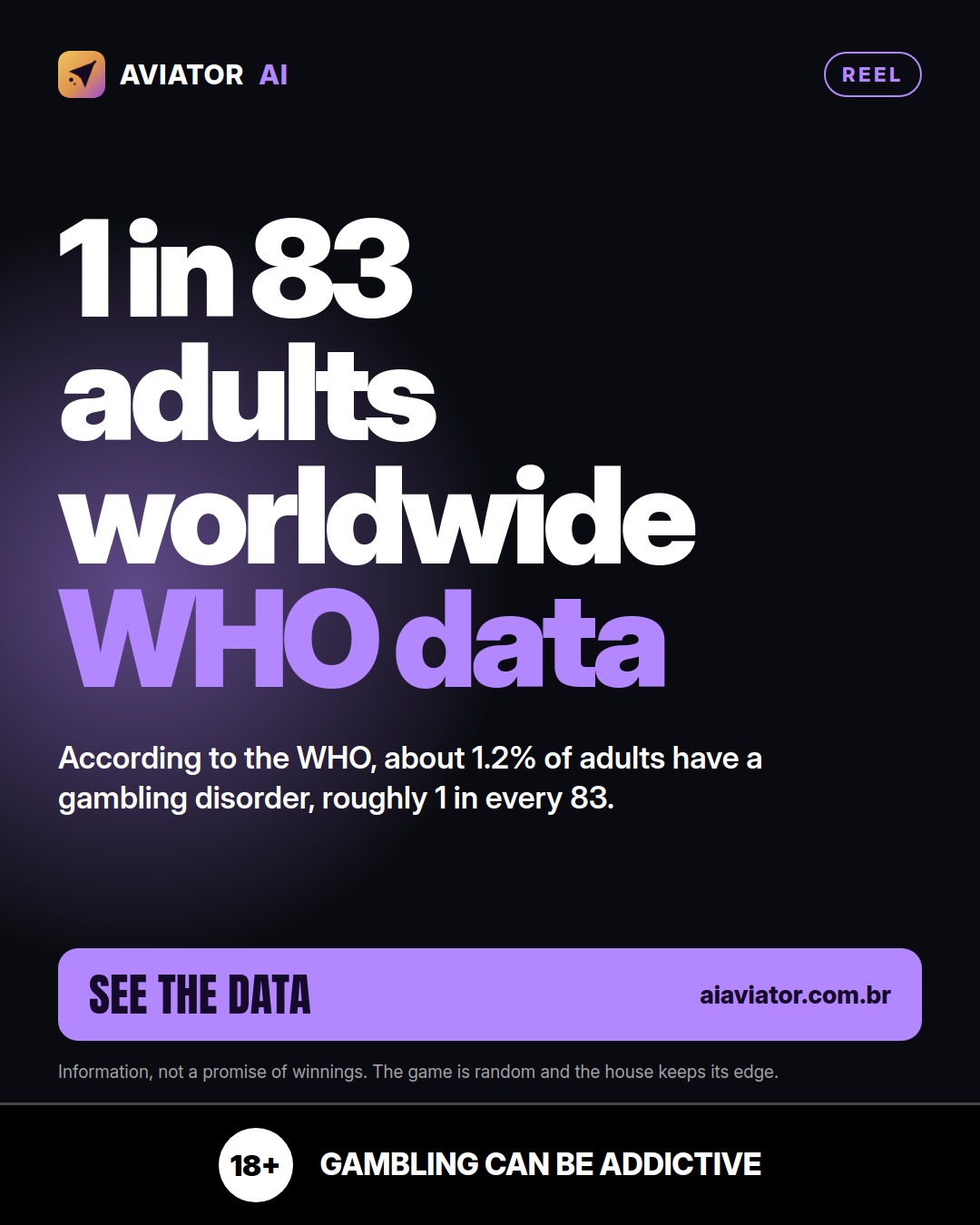
The WHO estimates that about 1.2% of the world's adults have gambling disorder, roughly 1 in every 83. Understand the figure and how Aviator AI presents information about the game.
 EN
 PT
 HI
 ES
When gambling comes up, it's easy to think only about who wins or loses some money in a round. But there is a public health figure that changes that conversation: according to the WHO, about 1.2% of the world's adult population has gambling disorder, which in simple terms is roughly 1 adult in every 83. That is the starting point of today's tip.
What the WHO measures
According to the WHO, gambling disorder is a health condition characterized by loss of control over gambling, with the activity taking priority over other interests and responsibilities in life. The 1.2% estimate refers to the adult population worldwide as a whole, not to people who simply gamble now and then.
Converting the number into the form of 1 in 83 keeps the same idea: the proportion is not negligible, which is why it is worth looking at the topic carefully. This reading is a direct division of the WHO figure, not a measurement made by Aviator AI.
What Aviator AI actually measures
Aviator AI does not measure gambling disorder, nor can it diagnose anyone. What the system does is track live crash game rounds and publish what it measured: hits, misses, and the behavior observed over time. So far, 294,892 monitored rounds have been tracked since measurement began, and the app has generated 183,949 predictions.
This transparency is meant to let readers see real numbers instead of promises. Each record is available for verification, and the history also shows the misses, not just the hits.
In the app
- History of monitored rounds, with hits and misses published.
- Count of predictions generated since measurement began.
- Data panel so you can follow what the app has measured, without promises of results.
The app's purpose is to be a tool for reading and tracking: those who understand the game have more clarity to make their own decisions.
Responsible gambling
Betting is permitted only for people over 18. If you notice that gambling is affecting your sleep, your work, your finances, or your family, seek help: stop, talk to someone you trust, and if necessary seek professional support. The WHO figure exists precisely to remind us that this problem is real and that asking for help is the first step.
Sources
Frequently asked questions
What does it mean to say that 1 in 83 adults has gambling disorder?
According to the WHO, about 1.2% of the world's adult population has gambling disorder. Dividing 100 by 1.2 gives approximately 1 in every 83 adults. It is a different way of expressing the same figure, not a measurement by Aviator AI.
Can Aviator AI identify who has problems with gambling?
No. The app tracks crash game rounds and publishes what it measured, such as hits and misses. So far, 294,892 rounds have been monitored and 183,949 predictions generated. Information about the game, not a promise of winnings.
Where can I get help if gambling is getting out of control?
Talk to someone you trust and seek professional support in your region. Past results do not determine future ones, and the most important thing is to take care of your health and well-being.
Share