Gambling and health: 448 million adults are at 'any risk', according to The Lancet
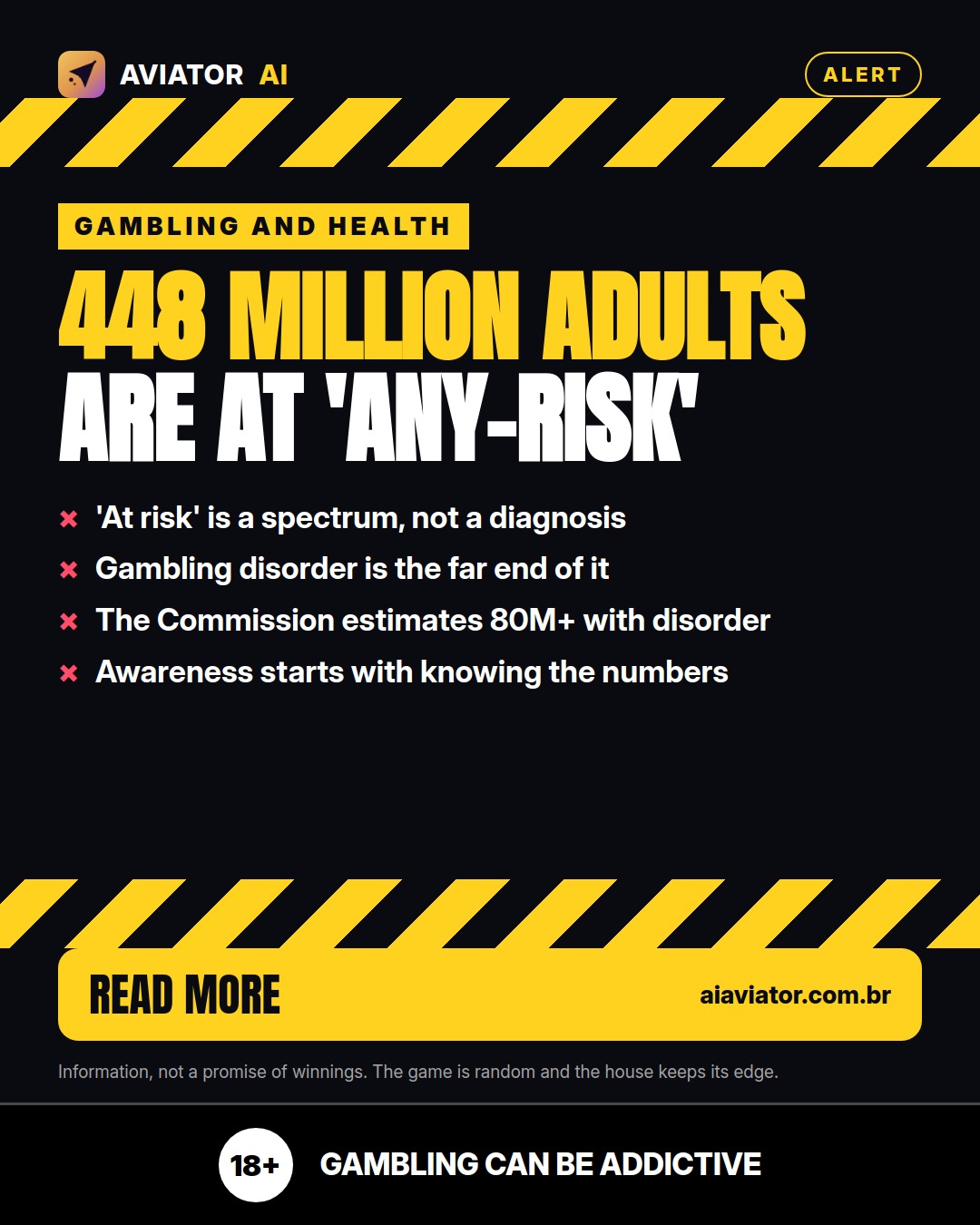
According to The Lancet Public Health Commission (2024), about 448 million adults are at some level of risk of gambling-related harm. Here is what that means.
 EN
 PT
 HI
 ES
When gambling comes up, the conversation tends to jump straight to the extremes: either everything is fine, or the person has a serious problem. The reality is broader. According to the Lancet Public Health Commission (2024), about 448 million adults are at some level of risk of gambling-related harm. That figure alone shows why it is worth understanding the topic calmly.
'Risk' is a spectrum, not a diagnosis
According to the Lancet Commission, the 'any-risk' category does not mean the person has a disorder. It describes a spectrum that ranges from people who gamble without major consequences to those who already feel impacts on their finances, relationships or mood.
This matters because most people in that range do not see themselves as unwell. Recognizing that risk exists, to different degrees, is the first step toward observing one's own behavior without dramatizing it.
Gambling disorder is the tip of that spectrum
Also according to the Lancet Commission, gambling disorder sits at the most severe end of this spectrum. It involves loss of control, continuing to gamble despite harm, and recurring impact on daily life.
Understanding this difference avoids two common mistakes: assuming any player is a clinical case, and assuming that, since there is no disorder, there is nothing to watch for. The middle ground is exactly where attention tends to make the most difference.
The Commission estimates more than 80 million with a disorder
The same Lancet Commission (2024) estimates that at least 80 million adults live with gambling disorder. This number is the most serious part of the picture and shows the problem is not marginal.
For readers following the topic informatively, note that these are population estimates, not individual assessments. They serve to size the public health problem, not to classify anyone.
Awareness starts with knowing the numbers
Knowing the scale of the problem helps move gambling out of the realm of taboo and into the realm of information. When you know that hundreds of millions of adults are at some level of risk, it becomes easier to talk about limits, warning signs and where to seek help.
In the app
Aviator AI is a system that reads the rounds of the Aviator game live and publishes what it has measured. So far, 221,867 rounds have been monitored since measurement began, and 148,616 predictions have been generated. These are tracking records, and serve as information about what happened, not as an indication of what comes next.
Responsible gambling is for people aged 18 and over. If gambling has started causing financial loss, affecting sleep, work or relationships, it is worth seeking professional support and talking to someone you trust. Pausing is always a valid option.
This text is informational. It does not recommend bets, does not indicate amounts and does not promise any result of any kind.
Sources
Frequently asked questions
What does 'any risk' of gambling-related harm mean?
According to the Lancet Public Health Commission (2024), it is a broad range that includes about 448 million adults, from people with mild signs to those already suffering impacts. It is not equivalent to a diagnosis of a disorder.
What is the difference between gambling risk and gambling disorder?
According to the same Commission, gambling disorder is the most severe tip of the spectrum, with loss of control and recurring harm. Risk is a broader category that can exist without a disorder.
How many people does the Lancet estimate have gambling disorder?
According to the Lancet Commission (2024), at least 80 million adults live with gambling disorder. These are population estimates, not individual assessments.
Share