Martingale: the math that breaks the bankroll on November 13
Doubling the bet after each loss seems safe until the numbers reach the limit. See the calculation the app shows and why the sequence always ends at some ceiling.
 EN
 PT
 HI
 ES
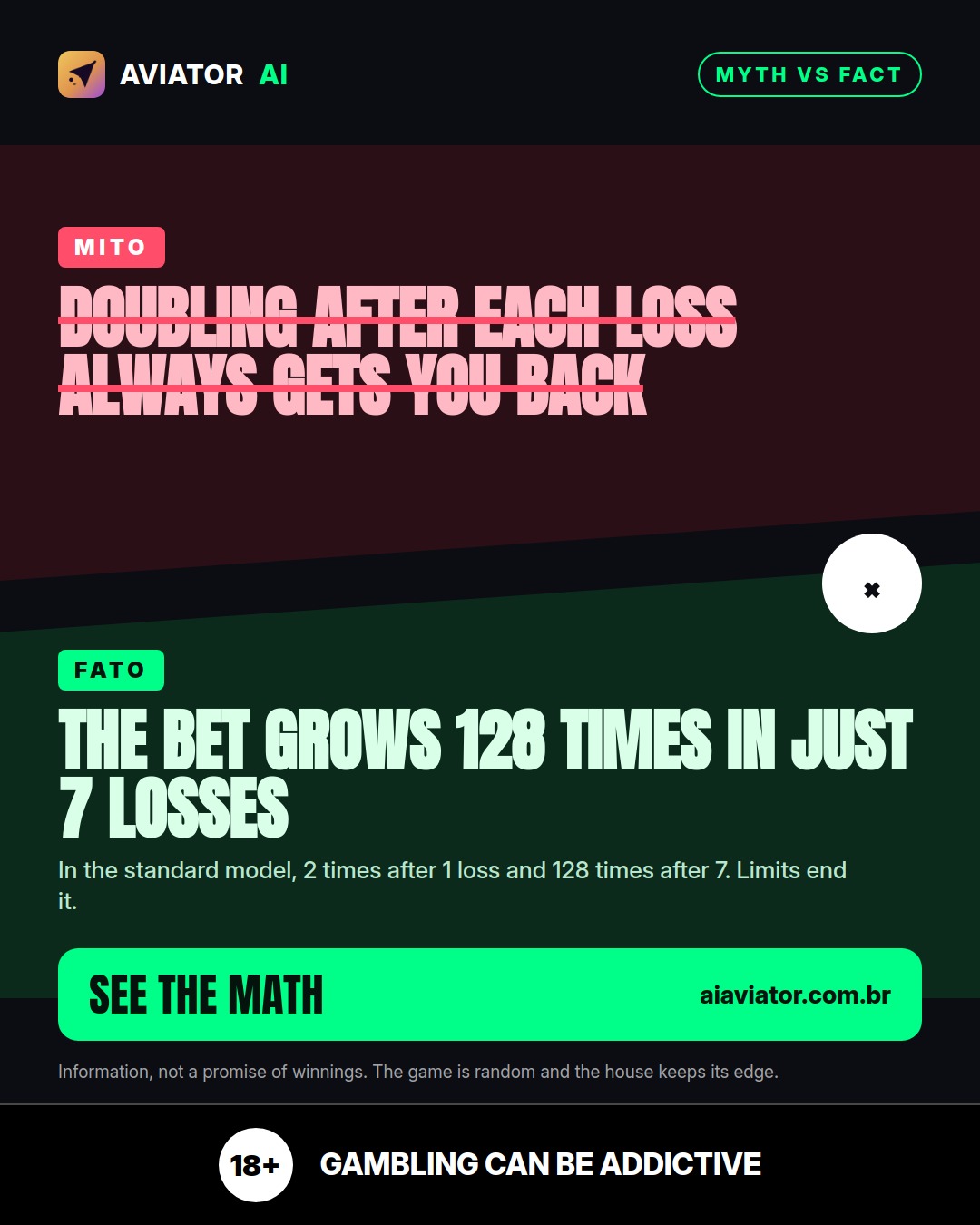
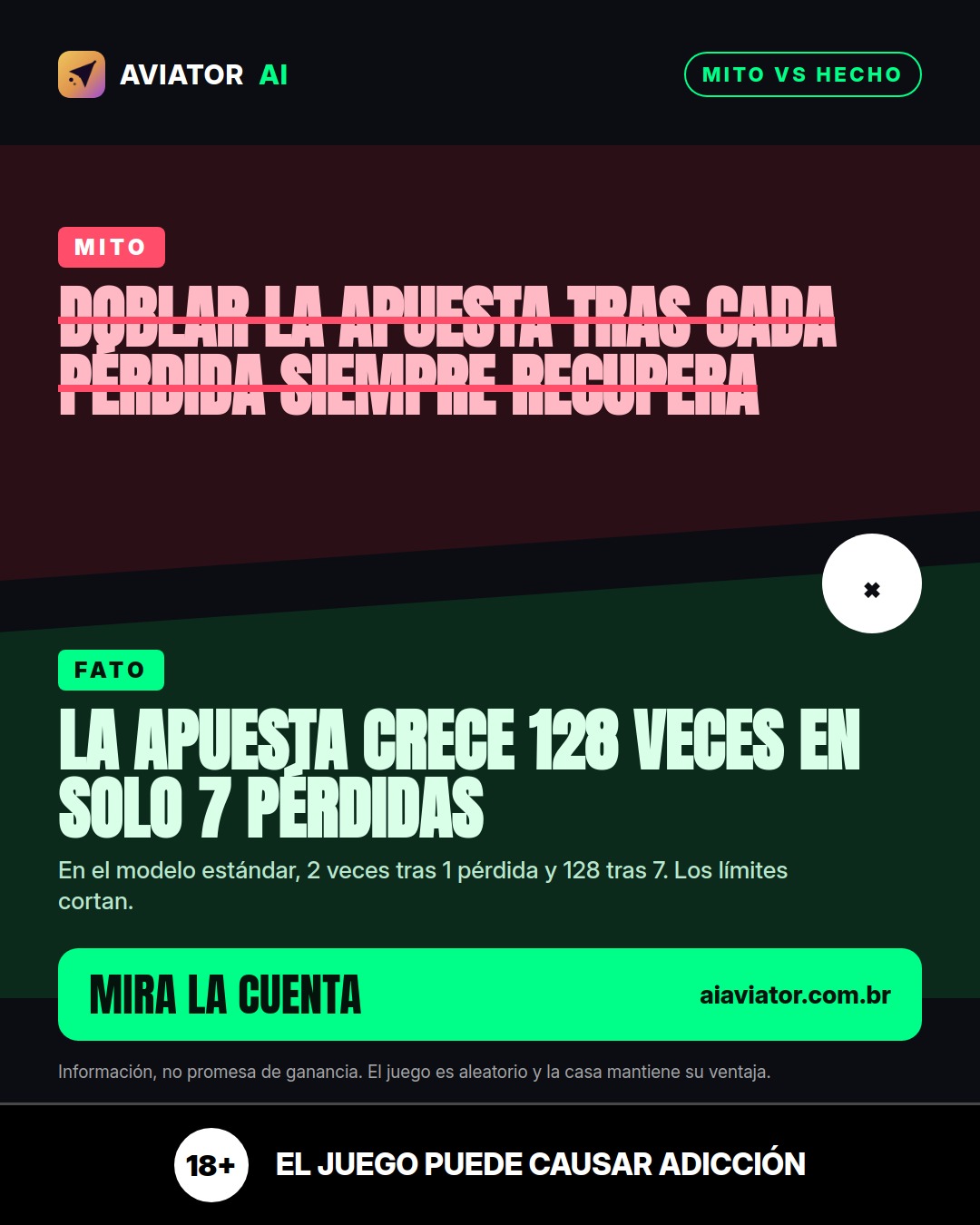
Doubling the bet after each loss always recovers, say martingale's supporters. In practice, the numbers grow far too fast. In the standard model, the bet goes to 2 times the base value after 1 loss and reaches 128 times after 7 consecutive losses. Before drawing any conclusion, it's worth looking at the arithmetic behind it.
The calculation that doesn't add up
If the bet doubles with each defeat, the next round is worth 2 times the base after 1 loss, 32 times after 5 losses, and 128 times after 7 losses. The growth is exponential: each loss requires a larger amount to offset the previous one, and the required amount rises faster than the bankroll can keep up with. This is the part that seems safe on paper and stops seeming safe when the numbers reach the limit.
The ceiling that always appears
A bankroll is finite, and every table has a maximum bet limit. For this reason, a sequence of doublings always meets one of them at some point. If the table limit or the balance runs out before the sequence turns, the accumulated loss becomes greater than any gain the strategy managed to recover. The sequence cannot continue indefinitely, and that is where the bankroll breaks.
It's worth noting that, in the standard model, the part that is usually forgotten is precisely the end of the sequence: martingale works on the rounds that win and fails on the round where there is no balance or limit left to cover it.
What Aviator AI measures
Aviator AI tracks live rounds and publishes what it has measured: hits, misses, and the history of predictions already checked. So far, the app has monitored 169,356 rounds since measurement began and generated 146,234 predictions. These numbers show what happened, and help readers understand the difference between what was measured and what one might imagine will happen.
- The app does not predict the next round: it reads what happens and publishes the result.
- Each round is independent; recent history does not determine the next one.
- Doubling bets increases the risk of total loss faster than it increases the chance of recovery.
In the app
In Aviator AI you will find the history of monitored rounds and the record of generated predictions, with hits and misses published as they were measured. The goal is for the information to be clear for anyone who wants to understand the game, without shortcuts and without promises.
Responsible play is for those 18 years of age or older. If the game starts to affect your budget, your routine, or your health, stop and seek support. Set a limit before starting on the amount you can afford to lose, and never use money needed for bills or essential expenses.
Frequently asked questions
Does doubling the bet after each loss recover the losses?
In a single winning sequence, recovery happens. But in the standard model the bet reaches 128 times the base value after 7 losses, and the bankroll or the table limit can run out before a win.
How many rounds has Aviator AI monitored?
Since measurement began, the app has monitored 169,356 rounds and generated 146,234 predictions, with hits and misses published as they were measured.
Does the app indicate when to bet?
No. Aviator AI reads live rounds and publishes what it has measured. It does not predict the next round or indicate an entry amount.
Share