1 in 83 adults: understand the scale of gaming disorder according to the WHO
Today’s tip uses a WHO fact (2024): the estimate of 1.2% equals “1 in every 83 adults”. See how this humanizes the conversation and strengthens responsible gameplay.
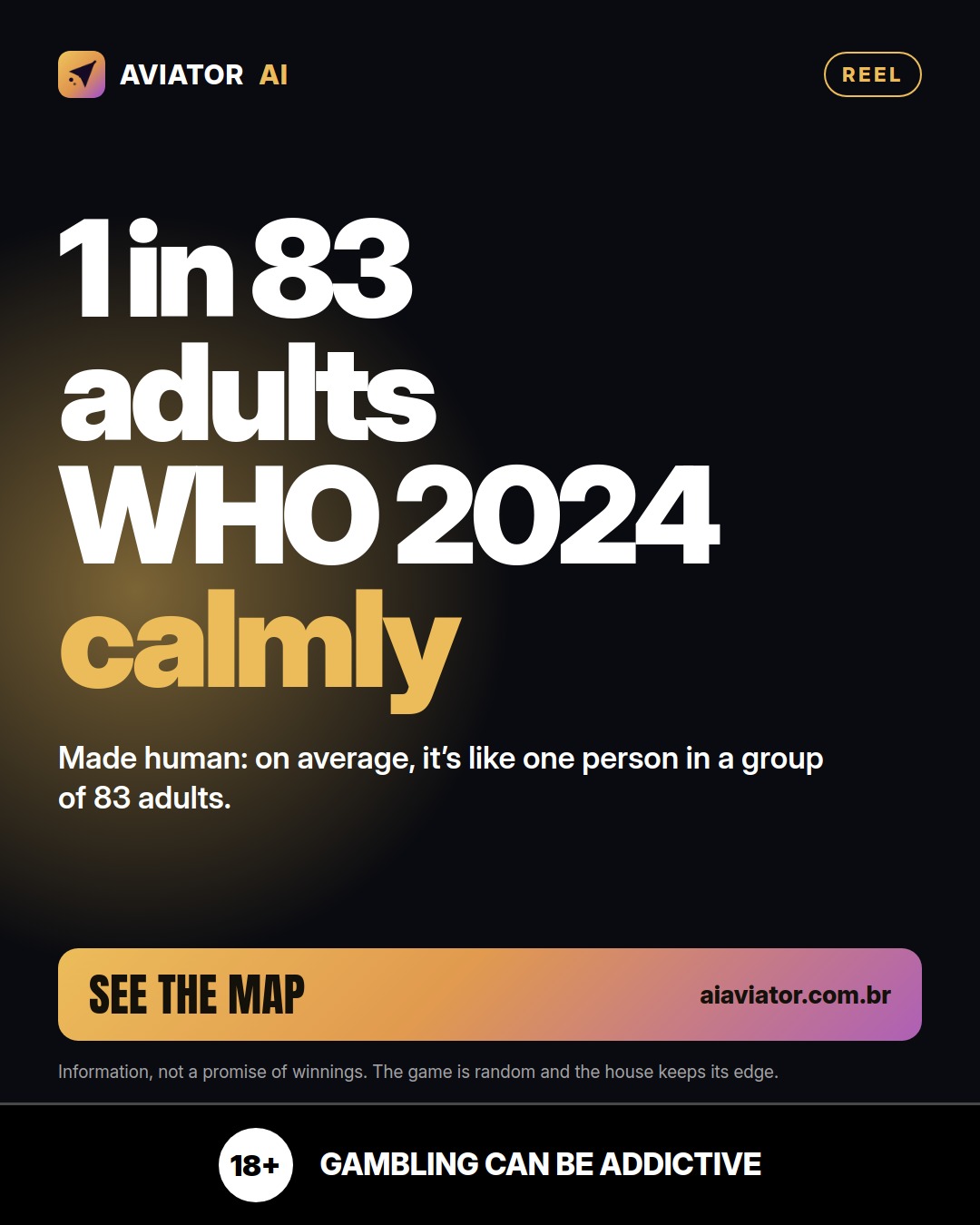 EN
 PT
 HI
 ES
Today’s headline highlights a number that “humanizes”: 1 in 83 adults. The message is simple — according to the WHO (2024), when you translate the estimate into everyday life, it creates the feeling that, within a group the size of 83 adults, there is a real chance that someone experiences this condition.
What “1 in 83 adults” means in practice
According to the WHO (2024), the estimate is 1.2% of the global adult population with gambling disorder (gaming disorder). This figure does not describe “who” the person is, but rather a condition estimated within the adult population.
Still according to the WHO (2024), 1.2% equals “roughly 1 adult in 83” — in other words, a way to express the same value in group language. Instead of getting stuck on the percentage, the number gains context: it’s not “cold statistics”—it’s a reference to understand the scale.
Why this translation matters for the debate (and for the app)
When it comes to games and mental health, the way we talk changes the impact. Today’s hook turns 1.2% into “1 in 83 adults”, which supports a more human perspective — without reducing the experience of those who suffer from a “rate”. The base remains the reading of the WHO (2024).
In addition, Aviator AI doesn’t work with “guesswork” about individual behavior. The system monitors rounds and records what it measured over time: 168.198 monitored rounds since the start of measurement and 141.327 generated predictions. This helps keep the focus on what can be observed in the product, while the conversation about social impact continues to be guided by data such as the WHO (2024) ones.
In practice, what the tip asks for is consistency in understanding: scale matters, and scale can guide care. If there is an estimate of 1.2% described by the WHO (2024), talking in terms of “1 in 83” helps avoid treating the issue as a distant exception.
Humanizing is not alarm: it’s supporting conscious choices
Today’s tip is not meant to cause panic. The goal is to humanize: by citing the equivalent “1 adult in 83”, based on what the WHO (2024) expresses, the conversation moves from the abstract back into the reality of groups — as if we were thinking about someone close to us.
This type of approach fits with responsible use: instead of focusing on “outcome”, attention goes to limits, signs, and behavior. The tip reinforces that context data exists to consider the topic because the WHO (2024) estimates 1.2% of gaming disorder among adults.
And on the product side, Aviator AI operates with round monitoring: 168.198 rounds and 141.327 predictions generated in the measurement history. That way, the tool stays in the observable part — while human care remains the central theme of today’s conversation.
In the app
In Aviator AI, what you find is a record of what was measured in the game’s rounds and the performance tracking of the generated predictions. Based on this tracking, the app helps keep the user attentive to what happens in the session, connecting the context and self-care conversation to the routine of use.
Responsible gaming means looking at limits and deciding with awareness. If you feel that the way you play is affecting your life, seek help. This content is information and reflection (18+). It is not a promise of profit and does not replace professional guidance.
Sources
Frequently asked questions
Where does the idea of “1 in 83 adults” come from?
According to the WHO (2024), the estimate is 1.2% of adults with gambling disorder, and the WHO (2024) itself indicates that 1.2% equals roughly 1 adult in 83.
What number does the WHO use in the estimate?
According to the WHO (2024), 1.2% of the global adult population has gambling disorder.
Does Aviator AI use historical round data?
Yes. In monitoring, Aviator AI records 168.198 monitored rounds since the start of measurement and 141.327 generated predictions.
Share