The 60% figure: who actually pays for gambling losses?
According to the WHO, about 60% of gambling losses come from people who gamble at harmful levels. Understand what this means and how to protect yourself.
 EN
 PT
 HI
 ES
When gambling comes up, the conversation almost always revolves around who wins. But the question almost no one asks is a different one: where does the money that betting companies collect come from? According to the WHO, about 60% of losses from gambling come from people who gamble at harmful levels. That is today's figure, and it changes the way gambling should be viewed.
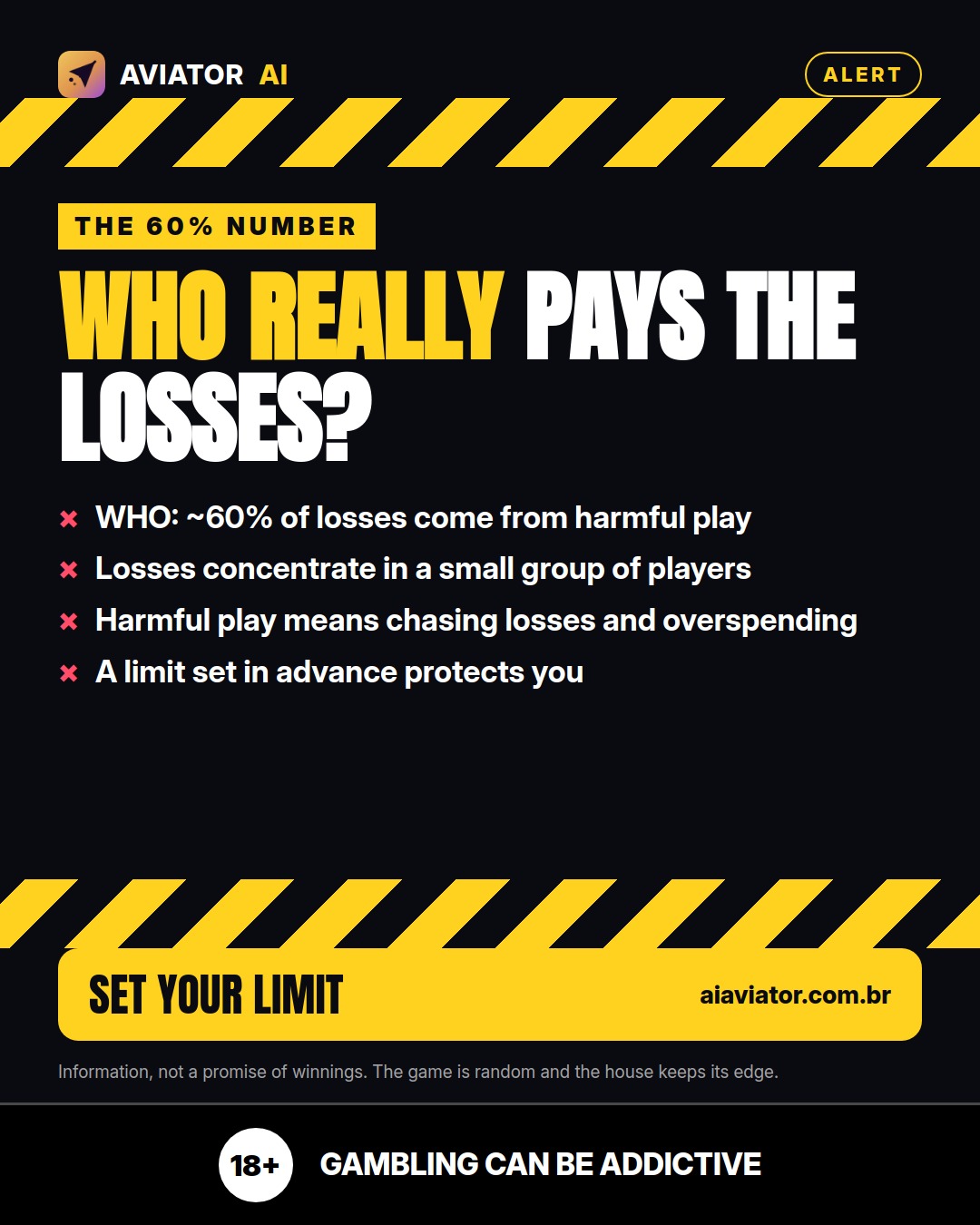
WHO: about 60% of losses come from harmful gambling
According to the WHO, people who gamble at harmful levels generate around 60% of gambling revenue. In other words, most of what is lost does not come from the occasional player who enjoys themselves and stops, but from those who have already lost control over the time and money they spend.
This does not mean every player is a risk case. It means the revenue model depends, to a large extent, on behaviors that cause harm to the bettor themselves. Understanding this proportion helps us see gambling as a risky product, not as a reliable source of income.
Losses concentrate among a few players
When a small share of people account for most of the losses, individual experience can seem distant from the statistic. But the pattern is clear: the more intense and prolonged the participation, the greater the chance that accumulated losses become significant.
For the reader, the practical lesson is to watch your own behavior: frequency, amounts, and the feeling of urgency. If these variables start growing out of control, gambling has stopped being leisure.
Harmful gambling means chasing losses
One of the most common signs of harmful gambling is trying to recover what was lost by betting more, faster, or with larger amounts. This logic rarely works, because each round is independent and previous losses create no obligation to return.
When betting becomes a way to offset losses, the risk has already exceeded what the player can safely manage. Recognizing this point is the first step to stopping.
A limit set in advance protects you
The most effective protection is usually simple: define, before starting, how much time and money are available for gambling, and respect those limits without exception. Written limits treated as leisure spending, not as an investment, reduce the pressure to recover losses.
In the app
Aviator AI is a system that monitors live Aviator game rounds and publishes what it has measured: hits, misses, and observed patterns. To date, 176,148 rounds have been monitored since measurement began, with 154,231 predictions generated. This information serves to track the game's history, not to indicate the next round.
Information about the game, not a promise of winnings. Past results do not determine future ones.
Gambling is entertainment for adults over 18. If gambling is affecting your financial life, health, or relationships, seek support and consider pausing or getting specialized help.
Frequently asked questions
What is the source of this tip's data? The central information comes from the WHO, which estimates that people at harmful levels generate about 60% of gambling losses. The app's monitoring figures come from the rounds the system itself recorded.
Sources
Frequently asked questions
What does gambling at a harmful level mean?
According to the WHO, it is a betting pattern that causes harm to the player's health, finances, or relationships. This pattern accounts for about 60% of the sector's losses.
Does the 60% mean every player loses a lot?
No. The data indicates that most losses come from those who gamble at harmful levels. Information about the game, not a promise of winnings.
How many rounds has Aviator AI monitored so far?
To date, 176,148 rounds since measurement began, with 154,231 predictions generated. Past results do not determine future ones.
Share