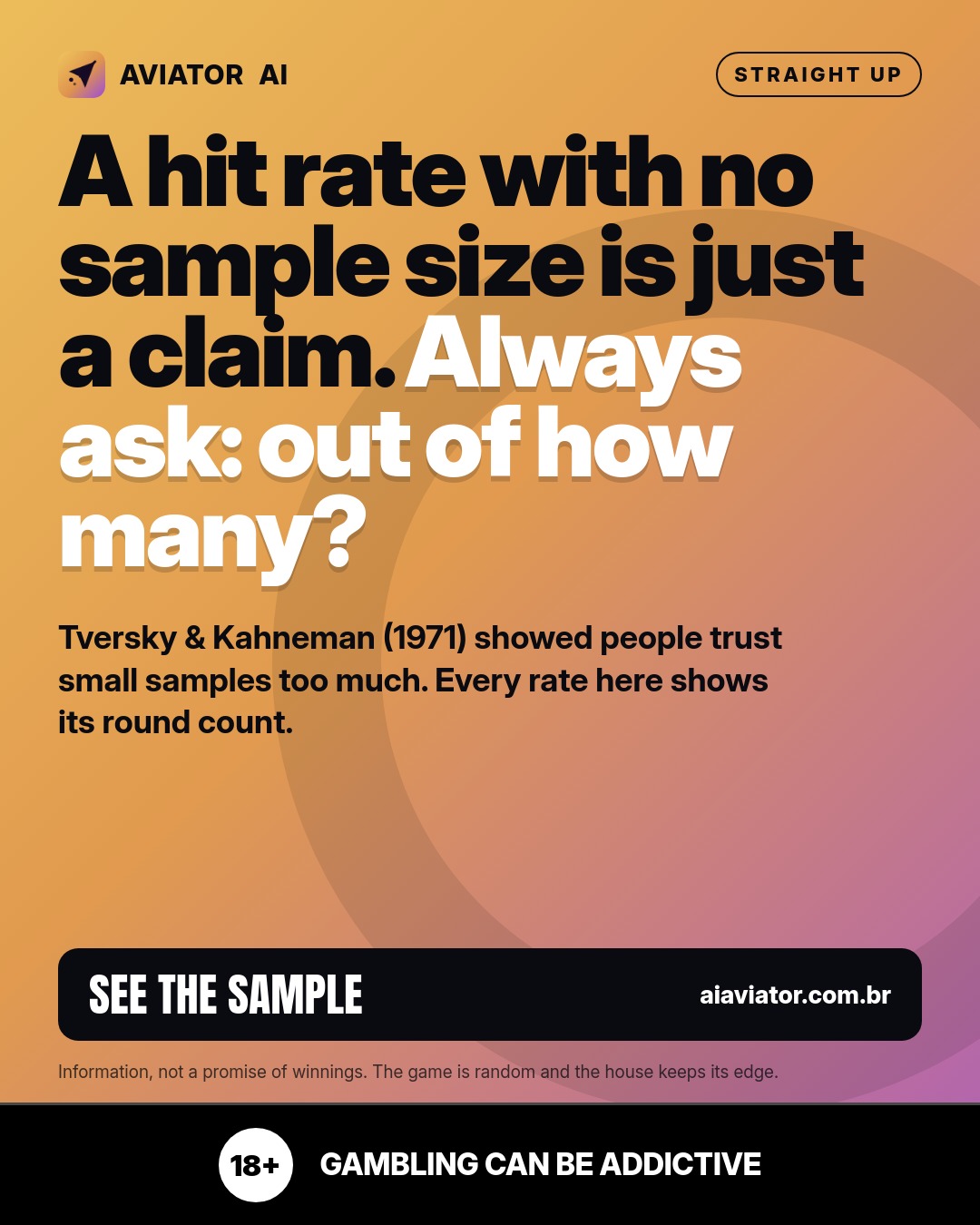
Hit rate without a sample is just advertising: always ask how many rounds
A hit rate only means something when it comes with the number of rounds behind it. Understand why small samples mislead and how to read the data from Aviator AI.
 EN
EN PT
PT HI
HI ES
ESHave you seen a post claiming that a certain method hits a high percentage of the time? Before believing it, ask the question almost no one asks: over how many rounds? Without the sample size, the hit rate is just a nice-looking number, not information.
Why the number of rounds matters
According to Tversky and Kahneman (1971), people treat a small sample as if it represented the whole. For that reason, a rate drawn from few cases seems more convincing than it should. Three hits in four attempts sound impressive, but they say very little about the actual behavior of a system.
The logic is simple: the smaller the sample, the greater the chance that the result was just short-term luck. A rate only gains weight when it rests on a sufficient volume of observations. Without that volume, it allows no comparison and no conclusion.
How Aviator AI presents the data
The app's practice is to publish each rate always together with the number of rounds that produced it. This way, you can assess the weight of each number before drawing any conclusion. Since measurement began, 164,540 rounds have been monitored, and the system generated 146,055 predictions over that period.
This is the standard to demand from any tool: a rate accompanied by its sample, a clear measurement period, and no promise of future results. Remember that the app measures what happened and does not guess the next round.
In the app
- Hit rate always displayed alongside the number of rounds analyzed
- Measurement history with the total rounds monitored since the start
- Record of generated predictions, so you can track hits and misses transparently
Gambling games involve real financial risk. Use any analysis tool only as a source of information, set limits before playing, and never bet amounts you cannot afford to lose. If you notice the game is affecting your life, seek help. This content is for adults 18 and over only. Information about the game, not a promise of winnings. Past results do not determine future ones.
Frequently asked questions
Sources
Frequently asked questions
Is a high hit rate alone enough to trust a method?
No. Without the number of rounds behind the rate, it is impossible to know whether the result is consistent or just short-term luck. That is why the app always publishes the rate together with the sample.
What is the minimum sample size for a rate to make sense?
There is no magic number. The larger the sample, the more stable the rate tends to be. That is why it is worth looking at the volume of rounds, such as the 164,540 monitored since measurement began, and not just the percentage.
Does this number of rounds mean the app can predict the next result?
No. The number shows the volume of rounds measured and analyzed. Past results do not determine future ones, and the tool publishes what it measured, including hits and misses.
Share