1 in every 10 is pink: what the measured window shows today
Today's tip starts from a simple number: pink appears in 1 in 10 measured rounds. The point is not to guess the next one, but to understand the window, the color, and the rule before acting.
 EN
EN PT
PT HI
HI ES
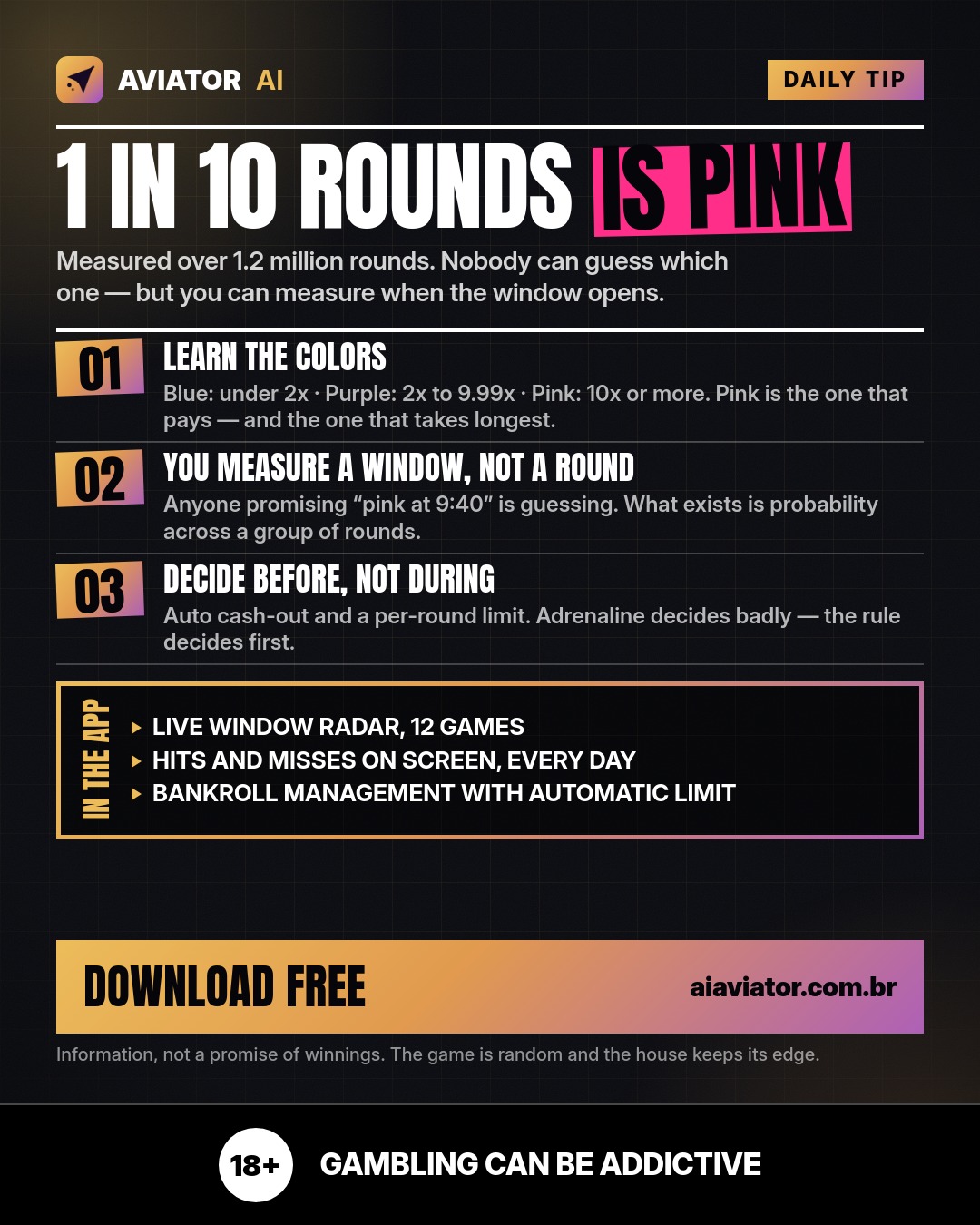
ESToday's headline is straightforward because the data is too: 1 in every 10 is pink. Measured across 1,2 million rounds, this snapshot helps read the game without fantasy. No one guesses what the next color will be, but it is possible to observe when the window opens and how it behaves over time.
Learn the colors
Before talking about the window, it is worth aligning the map. Blue is below 2x; purple ranges from 2x to 9,99x; pink starts at 10x or more. This reading avoids confusion when interpreting what appears on the screen and what each color is actually signaling.
The most striking part is pink, because it is what concentrates the highlight of the measurement. At the same time, it is the range that takes the longest to appear. For that reason, using the color correctly is not about rooting for a specific point, but about recognizing that there is a different behavior interval within the sequence itself.
When someone looks only at the shine of pink, they lose the context of the other colors. The value of the reading lies precisely in comparing ranges, not in turning an isolated round into a story. The color is a marker; the window is what the radar follows.
The window is measured, not guessed
The second tip reinforces the central principle: the window is measured, not guessed. Anyone who says "pink at 21:40" is guessing. What exists is probability in a group of rounds, and that is what daily monitoring aims to show in a useful way.
That difference changes the way the panel is read. Instead of waiting for a magic time, the reasoning becomes about observed behavior. The measurement helps show when the set of rounds gains strength for a more attentive reading and when it is cooler.
This is exactly where the standout number matters: 1 in 10 rounds is pink. Not as a promise of a round, but as a reference for what was measured. The message is simple: the game does not provide a fixed address, and the radar works with a probability window, not a crystal ball.
Decide before, not during
The third tip is about discipline. Auto-cashout and round limit come before the pressure of the screen, because adrenaline usually gets in the way of reading. When the decision is made beforehand, it does not depend on the impulse of the moment.
This is especially true for anyone following pink closely. Emotion can push the reading the wrong way, and that is why the rule needs to come first. The goal here is not to improvise in a hurry, but to keep a clear criterion for the round that is underway.
The idea of deciding beforehand also fits the monitoring logic: observe, record, and respect what was measured. The practical result is a more stable reading of the scenario, without turning anxiety into a method.
In the app
In the app, this tip appears in practice with Live window radar, 12 games, Hits and misses on screen, every day, and Bankroll management with automatic limit. The bridge between the reading and the product is exactly there: see the window, follow the history, and keep the rule visible on the screen.
With 1.185.475 rounds monitored since the start of measurement and 1.880.876 predictions generated, the app organizes what was observed without replacing measurement with a guess. It is a way to read behavior with more context, within what was actually followed.
Information about the game, not a promise of profit. Past results do not determine future ones. 18+ and always with responsibility: observing the data is different from expecting a fixed outcome.
Frequently asked questions
What is the highlighted color in today's tip?
pink
At what range does pink begin?
10x
How many rounds were measured for this reading?
1,2 million
Share