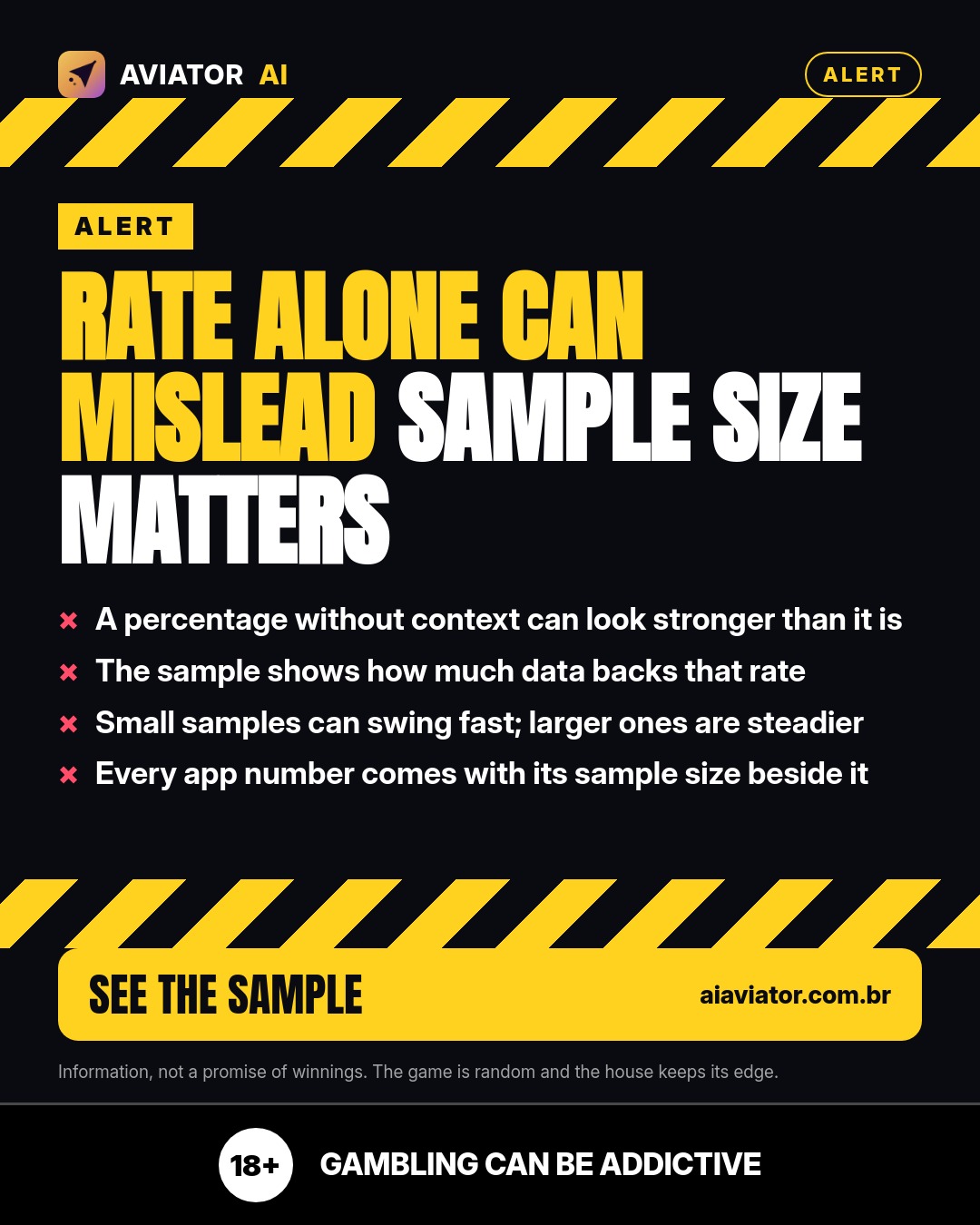
ALERT: a rate alone is misleading; sample size matters
A rate may draw attention, but without context it tells only part of the story. In Aviator AI, sample size comes into the picture as well to give a fuller reading of what was measured.
 EN
EN PT
PT HI
HI ES
ESToday's tip is straightforward: a rate alone is misleading. When the reading appears without the sample size, the number may even seem strong, but the part that shows how well that data was supported is still missing. That is why the phrase that guides the day makes sense: A rate without sample size tells only half the story.
A percentage without context can seem stronger than it is
The first trap is to look at the rate as if it were enough on its own. In crash games, that often gives the feeling of a ready-made reading, when in practice what you see is only a slice of the monitoring. Without the sample context, the rate loses part of its meaning.
In our daily use, the idea is not to inflate the number or turn it into a promise. It is to understand that a rate can be useful, but it needs to come with an observation base. This care avoids rushed readings and helps treat the data as data, not as a guess.
The sample shows how much data supports that rate
The second part of the tip is the complement that changes the reading: the sample shows how much data stands behind the rate. When the app brings both together, the interpretation becomes more honest, because you see not only the displayed result, but also the volume that supported it.
This matters especially when the reading seems too good to be approached without caution. The sample works as a brake on quick conclusions. It reminds you that an isolated number may impress, but a number accompanied by a measurement base speaks with more context.
Small samples change quickly; larger ones are more stable
The third tip explains why sample size weighs so much in the reading. Small samples change quickly because any new observation shifts the overall picture quite a bit. Larger samples, on the other hand, tend to present a more stable reading, precisely because they are supported by much more data.
This difference is not a technical detail; it is the heart of interpretation. If the rate came from a small base, it deserves more attention and more caution. If it came from a broad base, the number can be read more calmly, always as information and never as a forecast of the next round.
In the app
In the Aviator AI app, every rate appears next to the sample size. It is this combination that helps explain what was truly measured and avoid a detached reading, out of context. The product was designed to show the data alongside its base, clearly and directly.
- displayed rate with the sample size
- reading focused on what was measured
- continuous monitoring of the rounds
- context for interpreting the information
Since the start of measurement, the system has already tracked 1.324.342 monitored rounds and generated 1.936.846 forecasts. These numbers reinforce the point of the tip: volume and context go together when the reading is about what was observed.
Responsible gaming: content for adults 18+, focused on information. Information about the game, not a promise of winnings. Past results do not determine future ones.
Frequently asked questions
Why can a rate alone be misleading?
Because a rate alone shows only half the story.
What does the sample add to the reading?
It shows how much data supports the rate.
The app shows the rate with what?
With the sample size beside it.
Share